
Setting off on a trip to the “Chocolate Islands”, in the heart of the Gulf of Guinea, is not only a visual and natural adventure: it is also a linguistic immersion in colonial history and cultural resilience. If you are wondering what language is spoken in São Tomé and Príncipe, the official answer is clear: Portuguese.
As a Portuguese colony until 1975, the language of Camões became established as the lingua franca of government, education and trade. However, to truly understand everyday communication and the archipelago’s rich identity, it is essential to look beyond the official language and discover its vibrant Portuguese-based creole languages, which are the true communicative soul of the local population.
This mix of linguistic heritages makes talking to locals a fascinating experience for travellers. While Portuguese works perfectly well in hotels, airports and on tourist circuits, it is when you explore the roças (old plantations) or fishing villages that the richness of the creole heritage really shows. Preparing yourself linguistically, even with just a few basic phrases, will open the door to authentic interactions and help you appreciate the historical complexity of this African paradise.
The languages of São Tomé and Príncipe at a glance
- Official language: Portuguese, which according to the 2012 census is spoken by 98,4% of the population.
- Native creole languages: Forro (36,2%), Angolar (6,6%) and Lung'ie or Principense (1%).
- Other languages: cape Verdean Creole (8,5%) and, to a lesser extent, French (6,8%) and English (4,9%).
- For travellers: with Portuguese, or with Spanish and a little patience, you'll be able to communicate almost everywhere.
Portuguese: official language and gateway
Portuguese is the country’s lingua franca and the backbone of education and government. It is the language you will find in all official documents, on road signs, in the media and in most businesses.
Domain and use in the urban environment
In the capital, São Tomé, Portuguese is spoken by almost everyone, especially the younger generations and people with more education or who work in tourism. If you speak Portuguese, or Spanish and are familiar with Romance languages, you won’t have any major problems communicating day to day.
Standard Portuguese and its local tone
Although Portuguese is the official language spoken in São Tomé and Príncipe, it has a distinctive accent and rhythm that differ from the Portuguese of Portugal or Brazil. It is a soft, lilting accent, influenced by native and creole languages. It is a living, ever-evolving language, which adds an interesting cultural nuance to every conversation. In addition, because of the strong presence of international tourism (especially French, Spanish and English), many people working in hotels and services have a basic grasp of these foreign languages.
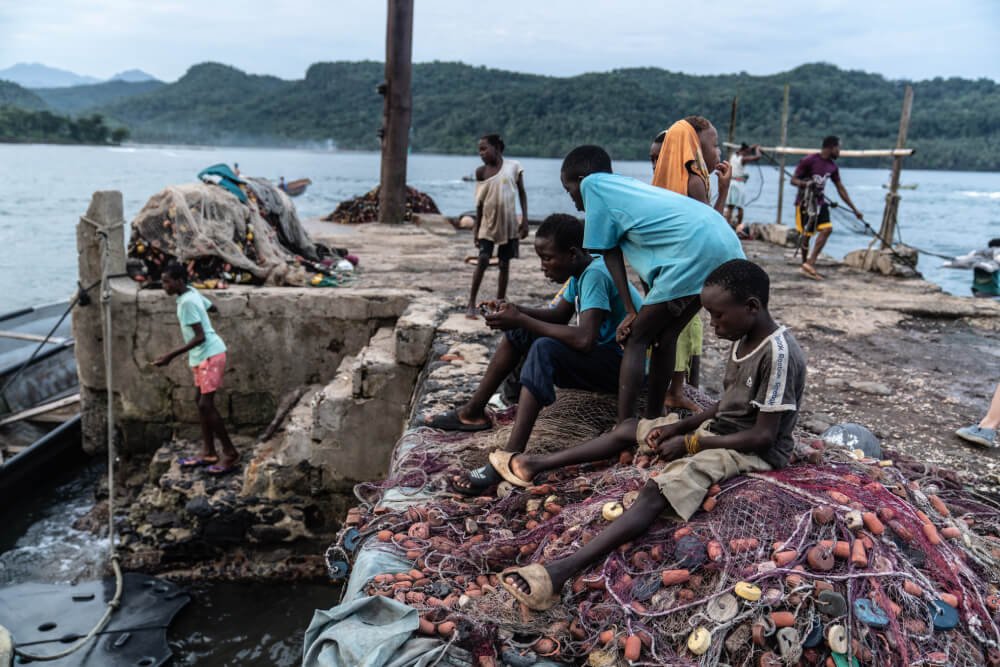
The linguistic treasure: the creole languages of São Tomé
The true linguistic essence of the archipelago lies in its three native creole languages: Forro, Angolar and Lung'ie. They were born from the mixing of Portuguese with the African languages brought by enslaved people during colonisation, mainly from the old Kingdom of Benin (Edo) and, later, from the Congo and Angola region (Kikongo and Kimbundu). These are not just dialects but fully fledged languages that reflect a history of encounter and cultural syncretism.
The Lining: the voice of the main island
Forro (also known as Santomense) is the most widely spoken creole on the island of São Tomé: according to the 2012 census, around 36% of the population speaks it. Its name comes from forro, meaning “freed”, a reference to enslaved people who gained their freedom. Although its vocabulary comes largely from Portuguese, it has a grammar of its own and is unintelligible to a Portuguese speaker without prior study.
Angolar: the language of resistance
Angolar (Ngola) is a Portuguese-based creole spoken mainly in the south of the island of São Tomé, by 6.6% of the population according to the 2012 census. It stands out because its African influence is stronger than that of Forro: a notable part of its vocabulary is of African origin, mainly Kimbundu, from Angola. Oral tradition holds that the language was preserved by the descendants of slaves who survived the shipwreck of a slave ship and lived in isolation in the south; other researchers believe instead that they descend from slaves who fled the plantations and took refuge in the forest. Either way, Angolar symbolises cultural resistance and early independence.
The Princely: the Creole of prince
On the island of Príncipe, people speak Principense (Lung'ie), a creole language that is critically endangered, with just a few hundred native speakers, most of them elderly (in the 2012 census, around 1% of the population said they spoke it). It is a linguistic treasure that, because of its isolation, has unique features. The dedication of local authorities and researchers is key to documenting and preserving this valuable form of expression. Understanding the presence of these languages is essential for any traveller who wants to grasp the country's complex cultural tapestry.
Cape Verdean Creole: a legacy of the roças
As well as the native creoles, the islands are home to Cape Verdean Creole, which according to the 2012 census is used by 8.5% of the population. It was brought by the thousands of Cape Verdean workers who arrived from the late nineteenth century, and above all during the twentieth century, to work on the roças, and today it lives on among their descendants, especially on the island of Príncipe.
Communication for the traveler: practical tips
If the language spoken in São Tomé and Príncipe is a concern for your trip, the good news is that Portuguese will be enough for most tourist interactions. Even so, a little effort will help you connect much better with the Santomean spirit.
Learn basic Portuguese
Learning a few polite phrases in Portuguese (obrigado/a, bom dia, por favor) will be much appreciated. Local people are warm and patient, and they will see your effort as a sign of respect for their culture and national language.
Communication in the roças and tours
If you plan to visit the historic roças or go trekking in rural areas, you may need a guide or an interpreter. If you choose to organise your excursions with tour operators such as Privilege Tours, we will make sure your guides are bilingual (Portuguese and creole), so that your experience is rich and free of language barriers. And if you decide to drive yourself, bear in mind that road signs and information are entirely in Portuguese; consider hiring a car for greater independence.
Adaptation and respect
Remember that many Santomeans are bilingual (Portuguese and creole) and that English, although present in the tourism sector, is not the dominant language. Always show patience and respect for the language spoken in São Tomé and Príncipe and its beautiful creole variants.
A journey through linguistic history
Language is a reflection of history, a mosaic in which official Portuguese intertwines with the creole languages of the Atlantic. For travellers, this linguistic landscape offers a unique opportunity to go beyond the beach holiday and delve into the cultural depth of Africa. It is a journey in which communication becomes an exploration of identity in São Tomé and Príncipe.
Frequently asked questions
What language is spoken in São Tomé and Príncipe?
Portuguese, the official language, spoken by almost the entire population. Creole languages such as Forro, Angolar, Lung'ie and Cape Verdean Creole are also spoken.
Is Spanish spoken in São Tomé and Príncipe?
It is neither an official language nor commonly used, but thanks to its similarity to Portuguese you'll be able to make yourself understood in many situations.
Is English spoken in São Tomé and Príncipe?
Not much: according to the 2012 census, around 5% of the population speaks it, mainly in the tourism sector.
What is Forro?
It is the most widely spoken Portuguese-based creole on the island of São Tomé. Its name means “freed”.
What language is spoken on the island of Príncipe?
Besides Portuguese, Lung'ie or Principense, an endangered creole with very few native speakers.
Ready to chat with the Chocolate Islands?
The adventure of discovering São Tomé and Príncipe awaits you. At Privilege Tours, we help you organise every detail of your cultural and linguistic immersion, from planning the itinerary to local guides.
Discover the cultural richness: contact Privilege Tours and plan your trip to São Tomé and Príncipe.